Streamlining Data Science Analysis
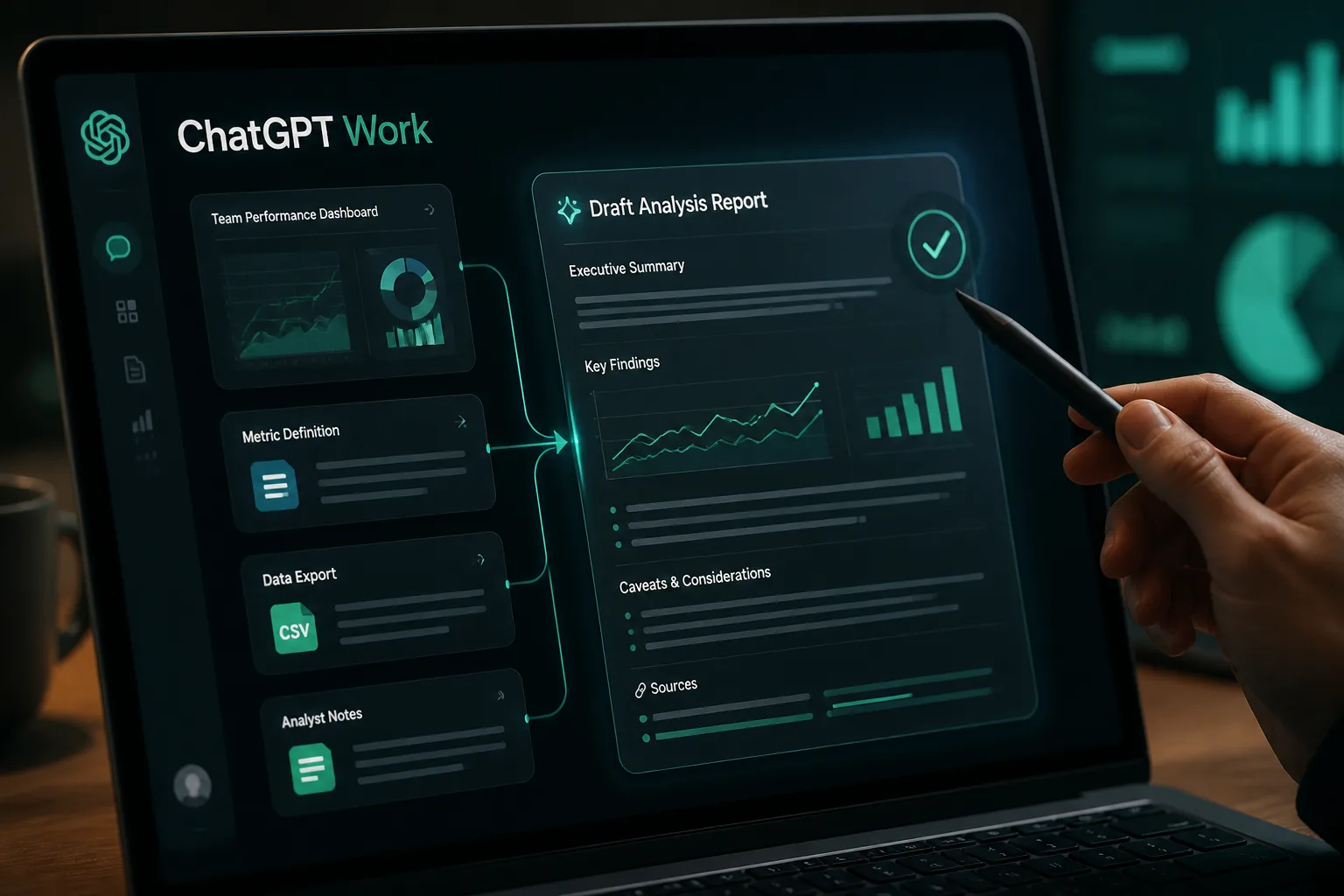
On July 14, 2026, OpenAI introduced ChatGPT Work, a tool designed to assist data science teams in enhancing their analysis processes. This tool enables teams to integrate various inputs—such as dashboards, metric definitions, data exports, experiment notes, and business context—into a cohesive first draft of an analysis deliverable.
Capabilities of ChatGPT Work
According to OpenAI, ChatGPT Work facilitates the creation of initial artifacts that encompass charts, caveats, source links, and review questions, which are essential for validation and sharing. The tool aims to convert scattered inputs into usable analysis assets more efficiently, leveraging the existing materials that teams already possess.
Input and Output Specifications
The guidance outlines the types of inputs that ChatGPT Work can process, including dashboards, metric definitions, raw data exports, experiment notes, and business context. OpenAI clarifies that the output generated by the tool is intended as a draft for review rather than a finalized analysis, incorporating elements to assist reviewers, such as caveats and references to sources.
Webinar and Additional Resources
OpenAI has made an on-demand webinar available that showcases these workflows. It is important to note that the recording reflects workflows previously hosted in the former Codex app; users can now replicate these steps using ChatGPT Work at chatgpt.com or through the ChatGPT desktop application. The guidance also directs users to related tools and resources, including ChatGPT solutions tailored for data teams and a Databricks integration.
Learning Opportunities
For practitioners looking to implement these workflows, OpenAI Academy offers additional guides and resources. Furthermore, a “Download ChatGPT Work” option is referenced on the published page, providing teams with a direct way to access the tool. The webinar and accompanying use-case pages serve as primary entry points for teams eager to explore these workflows in real data science projects.
Original source: OpenAI News