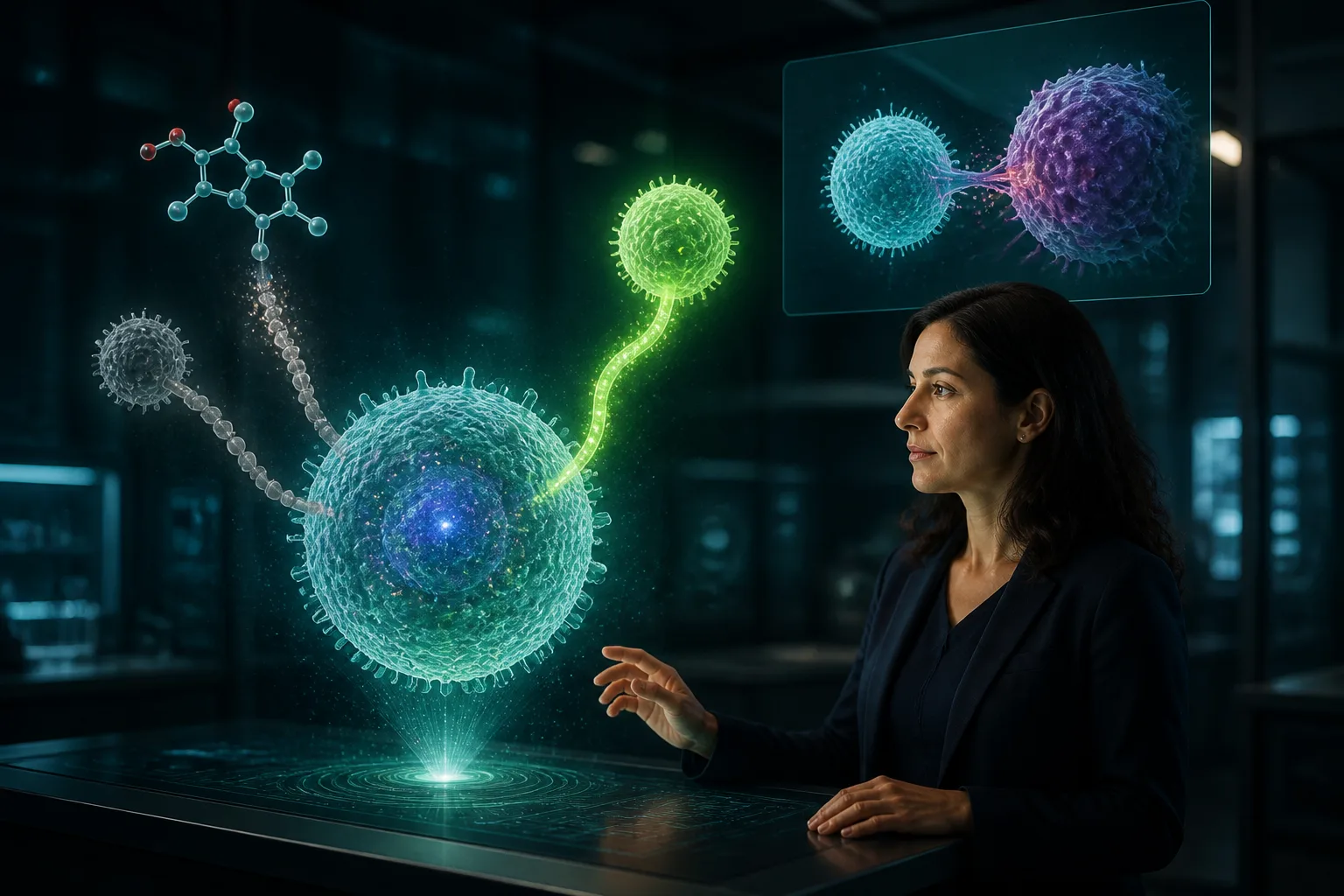
Immunologist Revisits Experiment with AI Assistance
Immunologist Derya Unutmaz, a professor at The Jackson Laboratory and the University of Connecticut, revisited a three-year-old experiment with the assistance of GPT-5 Pro, uncovering a mechanistic insight that his team had not identified in 2022.
Unexpected Results from a 2022 Experiment
The original experiment, conducted in 2022, involved exposing developing T cells to either a low-glucose environment or to deoxyglucose, a glucose-like molecule that interferes with glucose utilization. Researchers anticipated similar outcomes due to the limited glucose availability in both conditions. However, the results were strikingly different. T cells exposed to deoxyglucose produced significantly more cells associated with inflammatory responses compared to those in the low-glucose condition, and this effect persisted even after the removal of deoxyglucose. At the time, Unutmaz and his lab were unable to explain this discrepancy and decided to shelve the work.
Insights from GPT-5 Pro
In late 2025, after the release of GPT-5 Pro, Unutmaz revisited the experiment. He uploaded the experimental data into the model and requested an analysis. GPT-5 Pro proposed that deoxyglucose disrupted the construction of the protein IL-2, which plays a crucial role in inhibiting T cells from differentiating into the inflammatory Th17 subtype. This insight suggested that the mechanism behind the increased Th17 cell production in the deoxyglucose condition could be attributed to the disruption of IL-2 synthesis.
Experimental Predictions and Collaborations
Unutmaz further tested GPT-5 Pro’s capabilities by asking it to simulate a separate experiment he had previously conducted on CD8+ T cells targeting lymphoma. The model accurately predicted an enhanced killing ability for these CD8+ cells, aligning with Unutmaz’s unpublished laboratory results. This demonstrated that GPT-5 Pro could generate valuable experimental predictions, as it could not have accessed the results from the internet due to their unpublished status.
AI as a Collaborative Tool in Research
Unutmaz emphasized that AI has become integral to his research, functioning as a collaborator that helps narrow hypotheses and prioritize experiments. However, he also stressed the importance of human expertise in evaluating AI-generated insights. In addition to GPT-5 Pro, Unutmaz has utilized other advanced tools, including Codex and GPT-5.2 Deep Research, to compile extensive cancer mutation datasets and draft research materials focused on T cells, aimed at accelerating precision immunotherapy efforts.
Addressing Misuse Risks
OpenAI’s Preparedness Framework outlines strategies to monitor and mitigate the risks associated with powerful AI capabilities, ensuring responsible use in research. Unutmaz expressed optimism about the future of AI in scientific discovery, noting its unprecedented potential compared to previous technological advancements.
Original source: OpenAI News