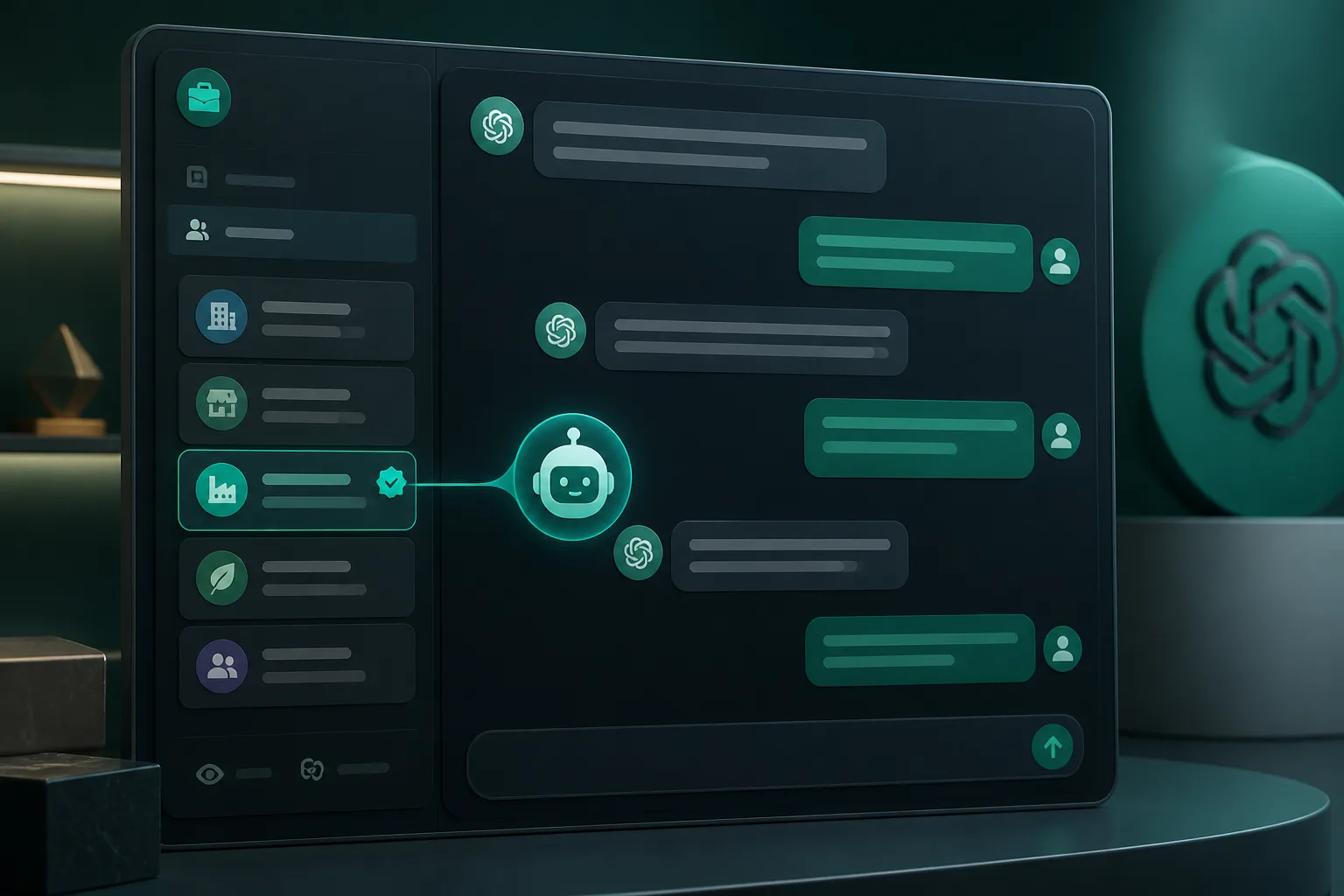
OpenAI has rolled out a Business Hub that allows companies to create verified business profiles and, for eligible organizations, launch specialized business agents within ChatGPT. The company said the move is an early step to integrate businesses more deeply into the platform as people use AI to discover products and make decisions.
What the Business Hub includes
The feature, currently in beta, lets businesses verify and update information about their products and services in a format that resembles profiles offered by other search engines such as Google. Companies that qualify can also publish a business agent so ChatGPT users can ask questions directly about the business and its offerings.
OpenAI said the Business Hub will provide limited insights into user interactions, including metrics such as profile views, business mentions and website clicks. The company framed these analytics as a way for businesses to understand how ChatGPT users engage with their profiles.
Verification and context
Businesses must complete a verification process to claim profiles, though OpenAI did not disclose the full details of that process. Benji Shomair, VP of Monetization, told journalists that there are “multiple verification methods that we use for different types of business in different markets.”
The new Business Hub follows an earlier OpenAI initiative that attempted to enable direct e-commerce within ChatGPT. That prior effort used a commission fee model and even included a “checkout cart” feature, but it was retired in March after failing to gain traction. Observers viewed that project as a potential revenue stream and a way to position ChatGPT more directly against Amazon.
OpenAI said the Business Hub is intended to help people discover and compare products via AI, positioning ChatGPT as a connection point between users and businesses. The Business Hub remains in beta, and OpenAI has not shared specifics about eligibility criteria or the verification procedures it will employ.
Original source: TechCrunch AI