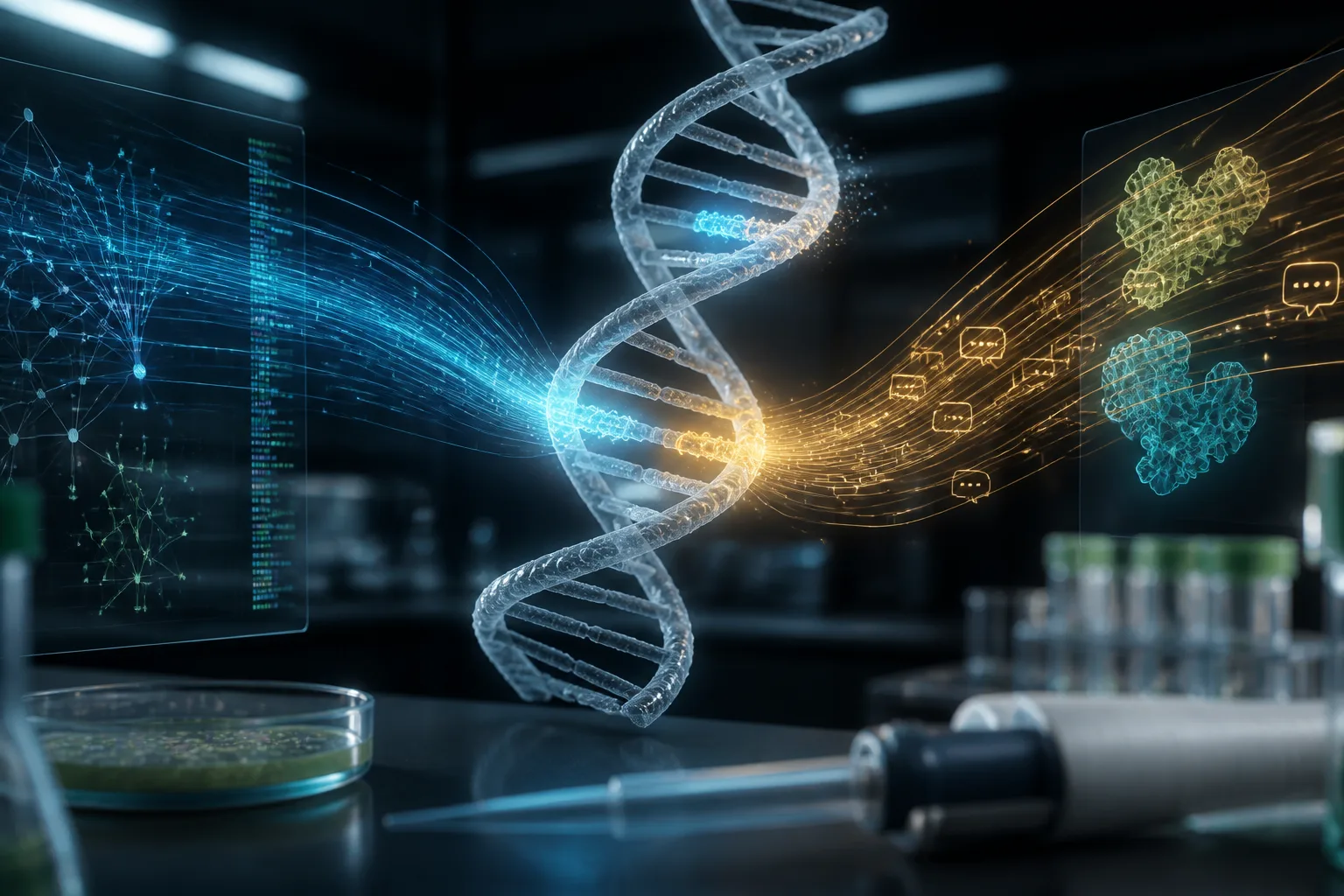
Bioengineer César de la Fuente and his transdisciplinary team use Codex, ChatGPT and their own deep-learning models to search genomes and protein datasets for molecules that might act as antimicrobials. The effort responds to growing concern about drug-resistant infections: about five million deaths in 2021 were associated with bacterial antimicrobial resistance, a figure projected to roughly double by 2050.
Searching genomes for antimicrobial candidates
De la Fuente frames DNA and proteins as information systems — nucleotides and amino acids form an “alphabet” that models can learn to read. The lab trains models to recognize sequence patterns linked to biological activity and to prioritize candidates from vast genome and protein databases. According to the lab, this approach can shorten the initial search for molecules from years to hours.
The team uses Codex and ChatGPT alongside in-house models to brainstorm hypotheses, write and refine code, preprocess datasets, analyze results, and connect methods across biology, chemistry and computer science. Lab members also use ChatGPT to review unfamiliar topics, clarify terminology and work in their native languages. De la Fuente describes the tools as a collaborative workspace that collects diverse ideas from team members.
From AI predictions to experimental testing
Researchers emphasize that identifying a promising sequence is only an early step. Validation requires showing that a candidate kills the target microbe, establishing the effective amount, and assessing effects on human cells. Chemists may modify candidates to improve potency, safety or stability, while further tests evaluate toxicity thresholds, how readily microbes develop resistance, and how the molecule moves through the body. Teams must also determine manufacturability, and candidates face regulatory review and clinical trials before becoming approved drugs.
“Ground-truth experiments are essential to validate AI predictions,” de la Fuente said, noting that AI and laboratory biology must advance together. He also compared current tools to past scientific instruments: the telescope and microscope expanded observation, and machines now help researchers understand, predict and engineer biology.
The lab continues to probe genomes of living and extinct organisms, using AI to lower disciplinary barriers while maintaining laboratory validation as a required step toward any therapeutic application.
Original source: OpenAI News