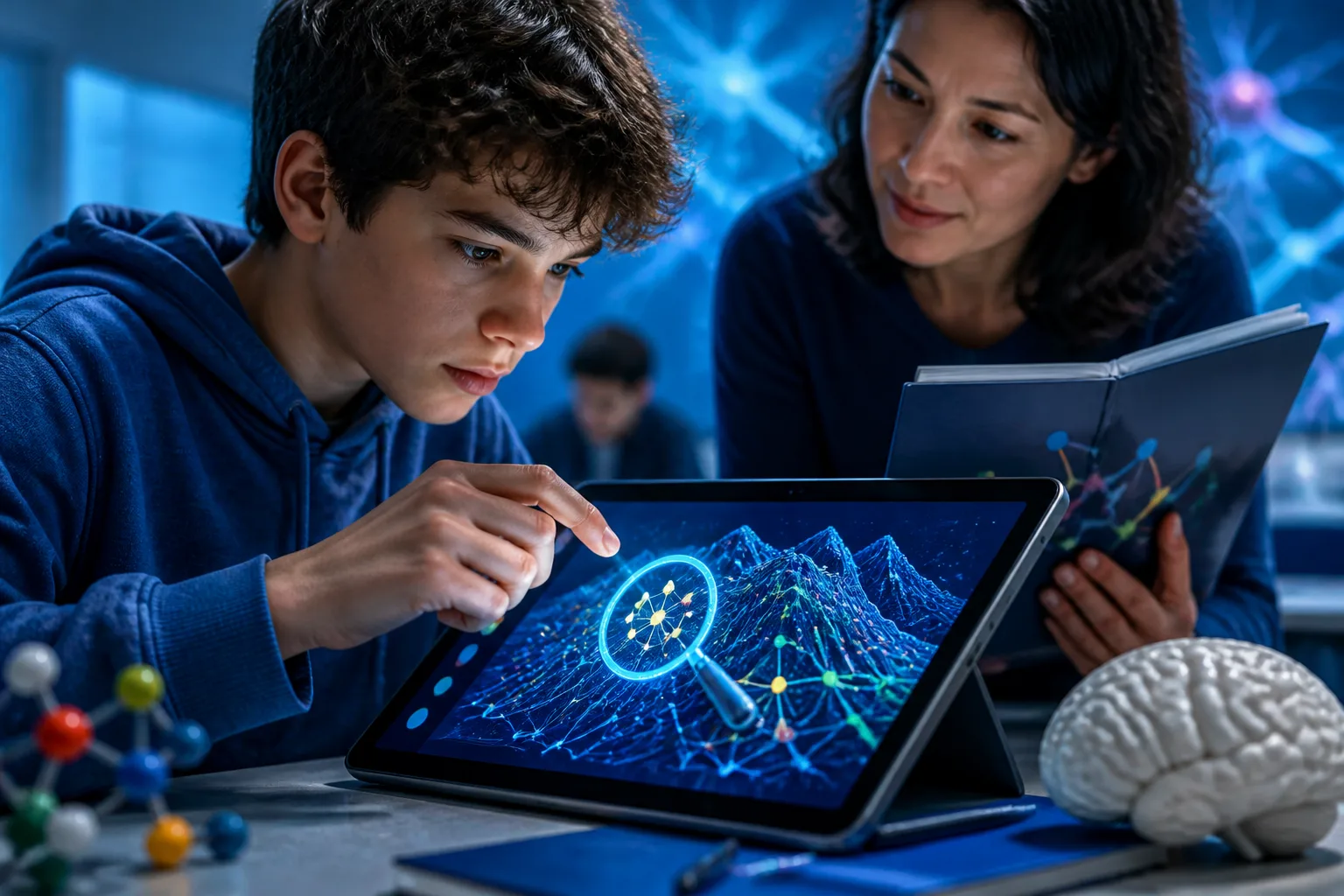
On Oct 26, 2026, Google Research and the Stanford Accelerator for Learning launched “Polar Peaks,” the third lesson in the AI Quests series intended to teach students how artificial intelligence can assist in mapping the human brain.
How the quest works
Polar Peaks places students ages 11 to 14 in the role of researchers who scan and map neurons to investigate a character’s memory loss. Tasks include data cleaning and model testing, with in-game mentors guiding learners through exercises designed to illustrate the role of human oversight when using AI. Google described the activity as a way for students to practice AI literacy and critical thinking.
Context and research inspiration
Google said the quest draws on more than a decade of its research in connectomics, the field that maps neural networks. The narrative connects classroom exercises to real-world work: students hear from two researchers involved in a recent mapping of the complete fruit fly brain, which Google described as the largest brain map by number of neurons to date.
Polar Peaks follows two earlier quests that focused on flood forecasting and eye disease detection, inspired respectively by Google Research’s Flood Forecasting initiative and an AI model for diabetic retinopathy screening. Google reported that more than 400,000 AI Quests have been completed to date and that the lessons are localized into 10 languages.
Teacher modules and awards
Google is releasing new teacher training modules within the Google AI Educator Series to help integrate the quest into classroom curricula. Modules for Quest #1 and #2 are already available, and the training module for Quest #3 is scheduled to be released next month, according to Google.
Google said AI Quests received a 2026 Webby Award for AI Education, Learning & Training and won Best Global K–12 Learning Solution at the ETIH Innovation Awards. The company plans to continue working with educators and partners to bring additional quests to classrooms this school year.
Original source: Google AI