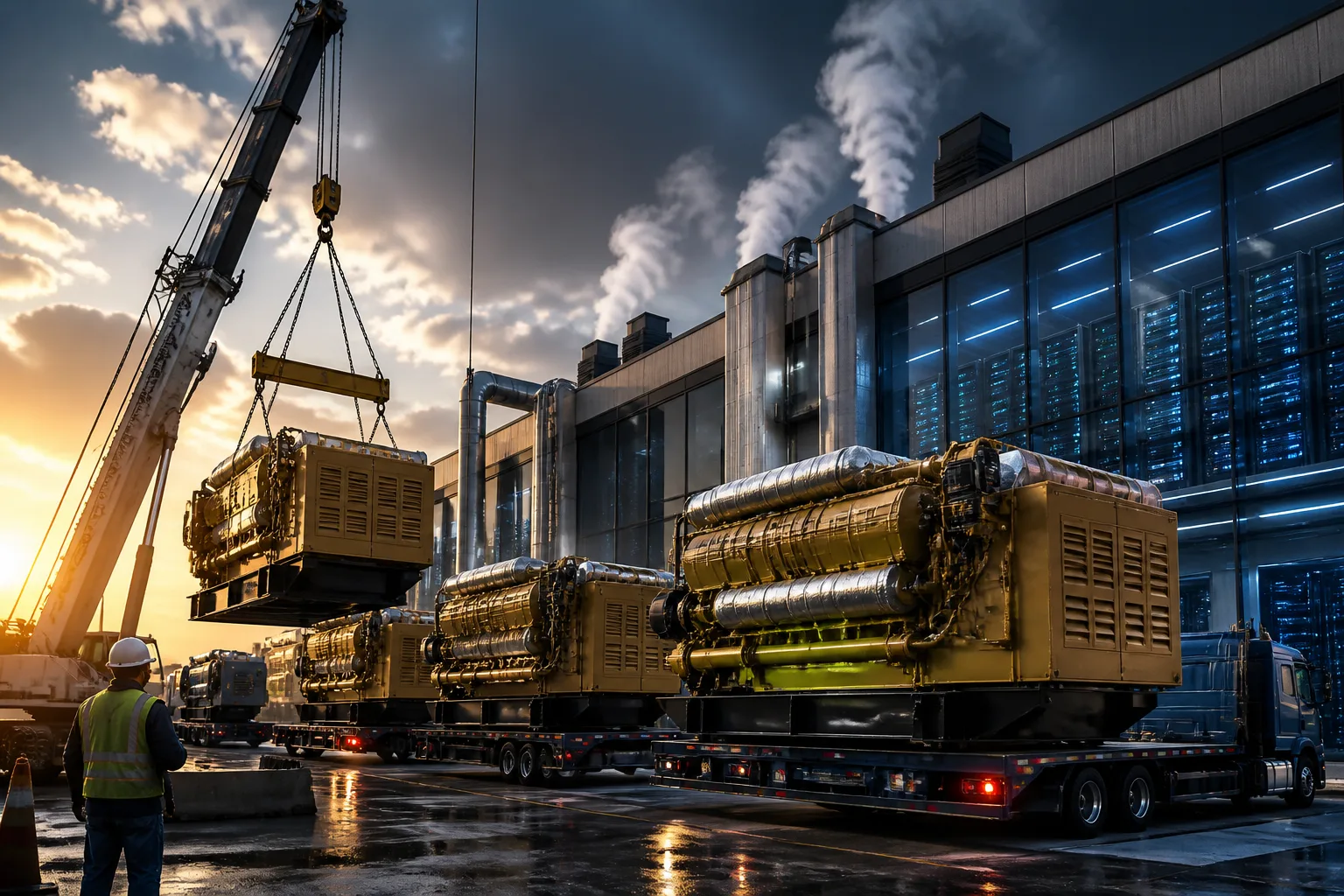
Anthropic has agreed to buy $3.4 billion worth of Caterpillar natural gas generators that together can produce as much as 1.7 gigawatts of electricity, the Financial Times reported. The purchase follows a period in which the AI company generally avoided owning physical power assets.
Shift from renting to owning capacity
The company’s S-1 filing says Anthropic has been buying compute capacity from others rather than building its own facilities: the filing disclosed payments to SpaceX subsidiary xAI of $1.25 billion per month through May 2029 and stated, “We expect to enter into additional similar services contracts.”
As demand for compute has increased, the market for power grew more uncertain and supply timelines lengthened. Backlogs for natural gas turbines now stretch into the early 2030s, and queues to connect to the grid can also be lengthy, according to the Financial Times, which described Anthropic’s purchase as a last resort.
Transaction details and context
The turbines were originally ordered by equipment supplier OnePWR a few years ago, but OnePWR reportedly could not find financing to complete the purchase. Anthropic had planned to buy them from OnePWR but ultimately purchased directly from Caterpillar; the report did not explain why OnePWR failed to secure funding.
Several major technology firms have recently announced plans to build on-site natural gas power plants for their data centers. Google, Amazon, Microsoft, and Meta are among those named in reporting as expanding reliance on gas-fired generation. Analysts cited in the report warn the trend could raise fuel exposure: one analyst expects natural gas prices could more than triple by the end of the decade in some markets. The same reporting notes that, if current buildouts proceed, U.S. data centers alone could use more natural gas by 2035 than Germany and Japan combined.
The Financial Times reported the transaction and related industry details; Anthropic’s S-1 filing provides the company’s disclosure about its contracts with xAI.
Original source: TechCrunch AI