Palo Alto startup Elorian has published its first model, Glimpse, as a research preview with API access and a chat interface. The company previously raised a $55 million seed round at a $300 million valuation before launching a product.
How Glimpse approaches images
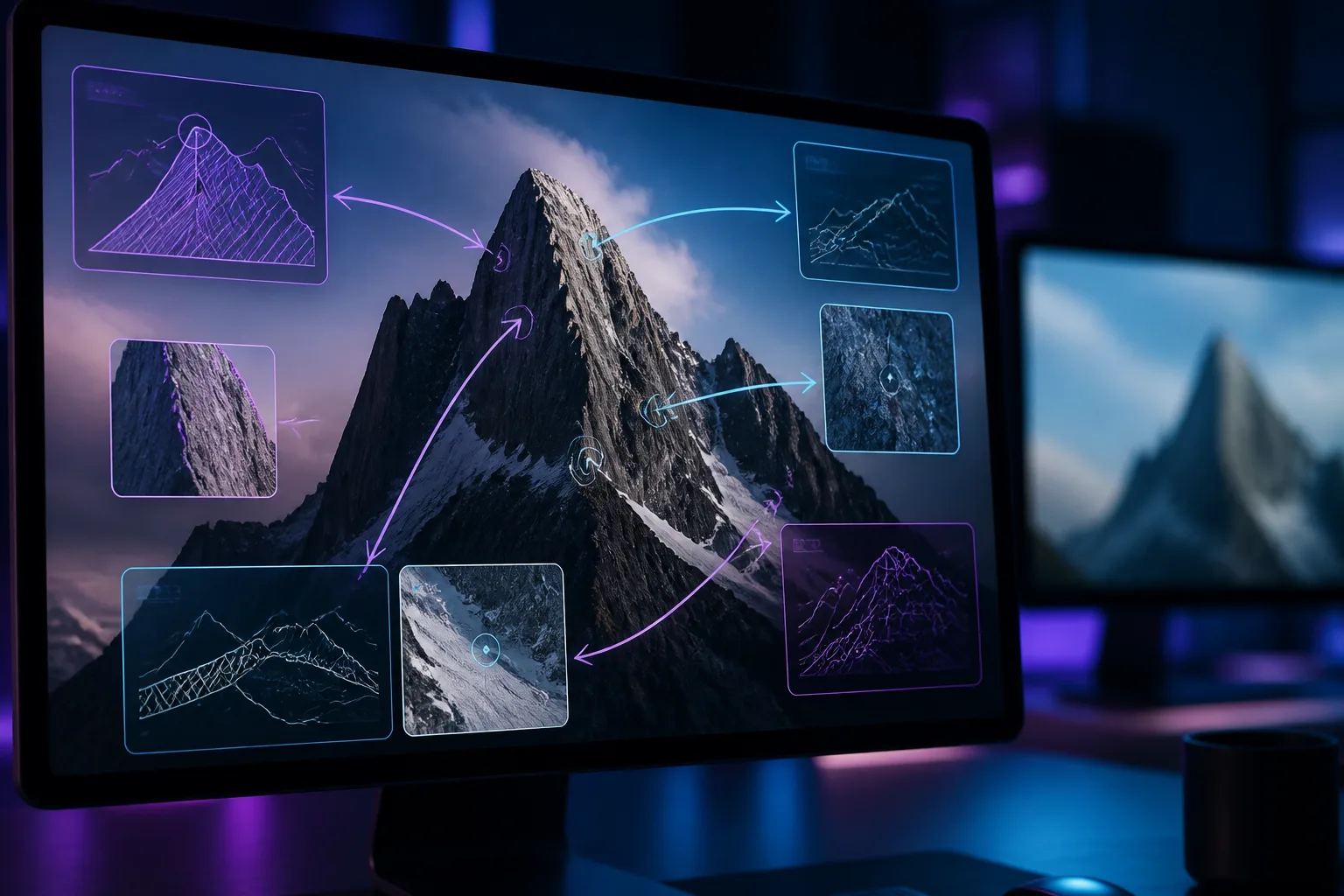
Glimpse is built to revisit image sources during reasoning rather than convert an image once into tokens and rely on memory. The model can crop into a region, extract specific frames from video or run code to measure and compare visual content in what Elorian calls a “visual scratch space.”
Elorian CEO Andrew Dai described a motivating example in which a frontier model failed to tell who was winning a photographed board game. Dai said board games and diagrams use visual symbol systems that current models often do not intuit without repeated inspection.
The company notes that the crop-and-zoom capability is not unique—OpenAI added crop-and-zoom to its o-series models in 2025—but says Glimpse was designed around the behavior and trained on a relatively small compute footprint, using a few hundred GPUs and a model substantially smaller than the frontier systems it is compared against.
Performance, pricing and targets
Elorian published internal evaluations that claim Glimpse outperforms GPT-6 Astra on scientific chart reasoning and short-form video captioning, while delivering competitive results on other visual reasoning tasks. Those results are presented by Elorian.
Glimpse’s pricing is $0.60 per million tokens in and $3 per million tokens out. Elorian positions that cost as cheaper than some mid-level models such as Sonnet and Sol, but more expensive than lightweight models like Haiku and Luna.
The company’s seed round was co-led by Striker Venture Partners, Menlo Ventures and Altimeter Capital, with participation from Nvidia and Google chief scientist Jeff Dean. Initial customers targeted include robotics firms, scientific labs, media and creative companies.
Elorian says its longer-term plan is to move from seeing to doing—using scene models to choose actions and directly control robots. Dai stated the company’s aim for next year is to build “the world’s best visual reasoning model.”
Original source: TechCrunch AI