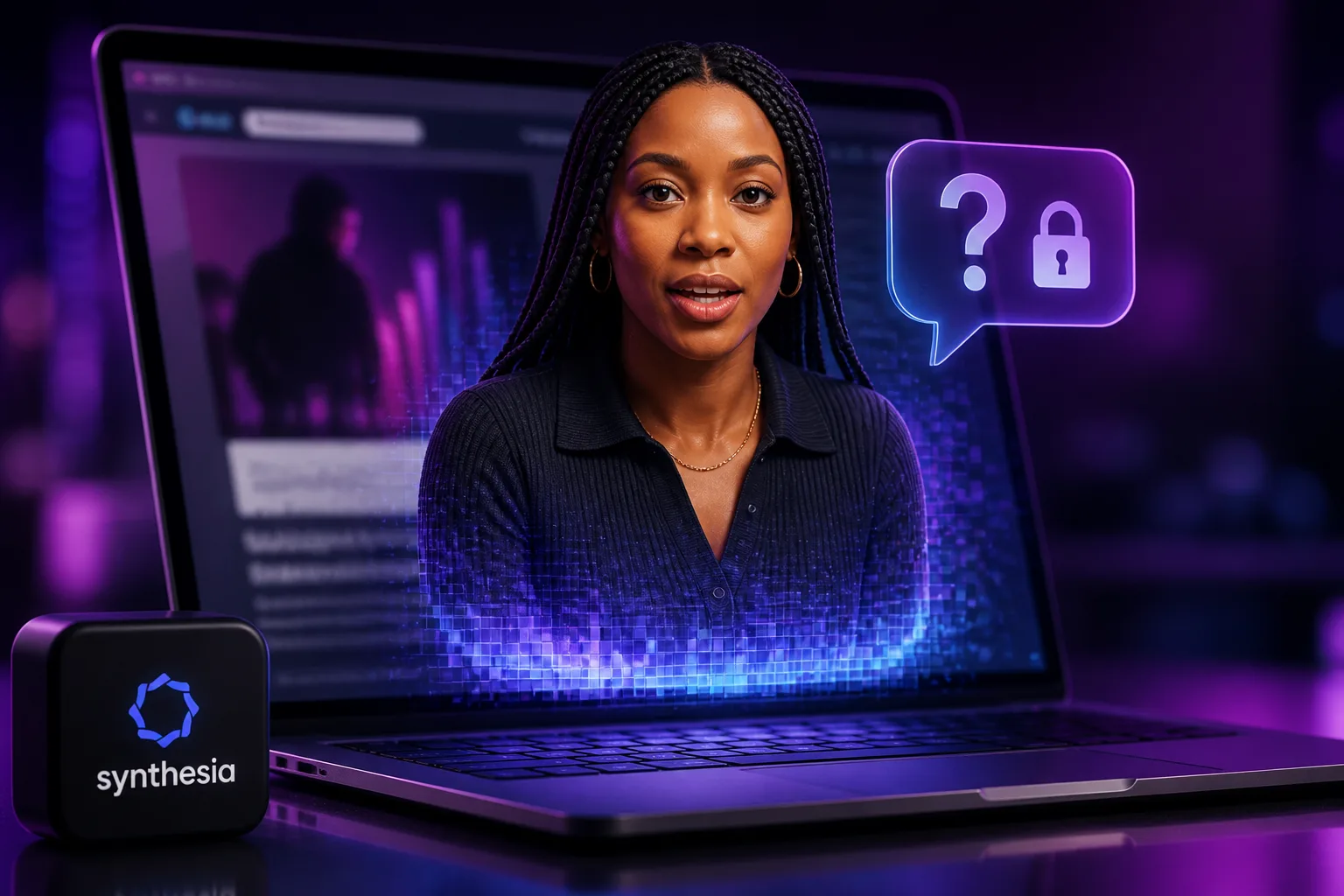
Synthesia’s Digital Avatar for Dominic-Madori Davis
Synthesia has developed an interactive digital avatar of Dominic-Madori Davis, specifically designed to answer questions about her article on venture-backed startup fraud. This innovative avatar was created during a visit to Synthesia’s newly opened office in New York City, marking the first time the company has produced a digital avatar for a journalist.
Avatar Creation Process
The avatar was built using a series of photographs and a two-minute voice recording provided by Davis. Synthesia, originally based in the U.K., crafted both personal and interactive versions of the avatar. The personal avatars are programmed to read supplied scripts, while the interactive avatars can respond to user input. However, the interactive avatar created for Davis is deterministic, meaning it is limited to responding only to queries related to the specific article on venture fraud.
Technical Specifications
The technology behind the interactive model integrates several components: a voice-to-text system that converts spoken input into text, an agentic language model that interprets the text and generates responses, a text-to-voice model that vocalizes these responses, and a video model developed by Synthesia that animates the avatar during interactions. Users also have the option to select alternative models from other providers such as Cartesia, ElevenLabs, Google, or OpenAI, and can choose to host their avatars on their own cloud infrastructure or opt for Synthesia’s hosting services.
User Reactions and Limitations
According to Davis, the creation process took a few days, and she found the personal avatar’s voice to be quite accurate when discussing seasonal topics. Reactions from friends were mixed, with some finding the results both intriguing and unsettling. Davis’s mother described the avatar as “amazing.” However, the interactive avatar’s responses were strictly confined to the venture fraud story; when asked unrelated questions, it consistently redirected users back to the article.
Future Implications for Journalism
The emergence of avatars like Davis’s has sparked discussions about the potential for such technology to augment or even replace human journalists. While one investor expressed immediate skepticism about avatars presenting news, the conversation continues about the role of digital twins in journalism. Davis noted that trust remains a critical element in journalism that may not be easily replicated by AI.
Synthesia’s Position in the Avatar Industry
Synthesia is part of a rapidly growing industry focused on digital avatars, alongside competitors like D-ID, HeyGen, and Colossyan. The company achieved a valuation of $4 billion earlier this year and reported crossing $100 million in annual recurring revenue last year. For Davis’s avatar, Synthesia produced versions with and without glasses, offering both personal (scripted) and interactive (listener-capable) models, with the interactive version strictly adhering to the training scope of the selected article.
Original source: TechCrunch AI