What Voyager offers
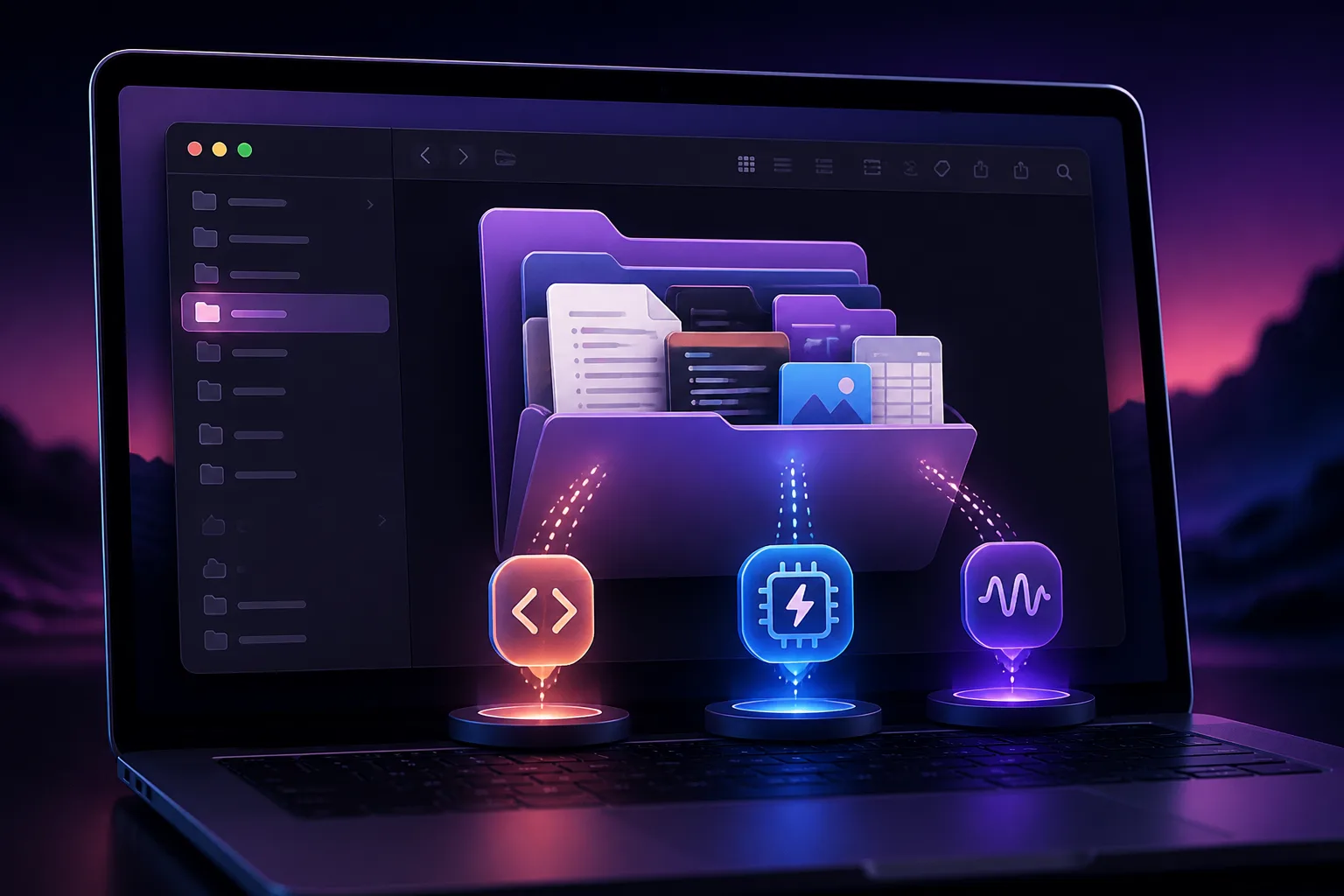
Voyager is a file browser for macOS that embeds AI agents into everyday file work. The interface functions like a familiar Finder experience while allowing users to open agent chats tied to specific folders or files. The maker, co-founder Jongmin Park, describes the product as a way to keep task context—source files, decisions and outputs—closer to the files themselves rather than scattered across chat threads.
Core features available at launch include standard file browsing, an in-browser agent chat, and an Arc-style tab workspace to keep frequently used folders and chats organized into tab groups. The product’s current feature set is free to use.
Agent integration and limits
Voyager supports several agents at launch: Claude Code, Codex and Hermes. Agents run directly in the folder when a chat is opened there, which the maker says avoids switching context between separate apps or threads.
On limitations, Jongmin Park acknowledged that “for now, there’s no system that tracks which files the agent changed.” He added the team is investigating ways to let users revert agent work when it goes wrong. Users in early comments asked whether Voyager records which files a task used and which result was ultimately chosen; the maker confirmed tracking and result-selection provenance are areas under research.
Several users noted practical benefits of tying agent sessions to files. Commenters such as Rodrigue Shema and JC Haplo emphasized the challenge of re‑explaining background to agents when context remains in chat threads, and said placing agents in the file browser can simplify follow-up work.
Availability
Voyager is presented as the team’s second launch and is marked as launched in 2026. All current functionality is free; the company lists its site as voyager.fm. The team states it is working on broader agent support and improved provenance features.
Original source: Product Hunt