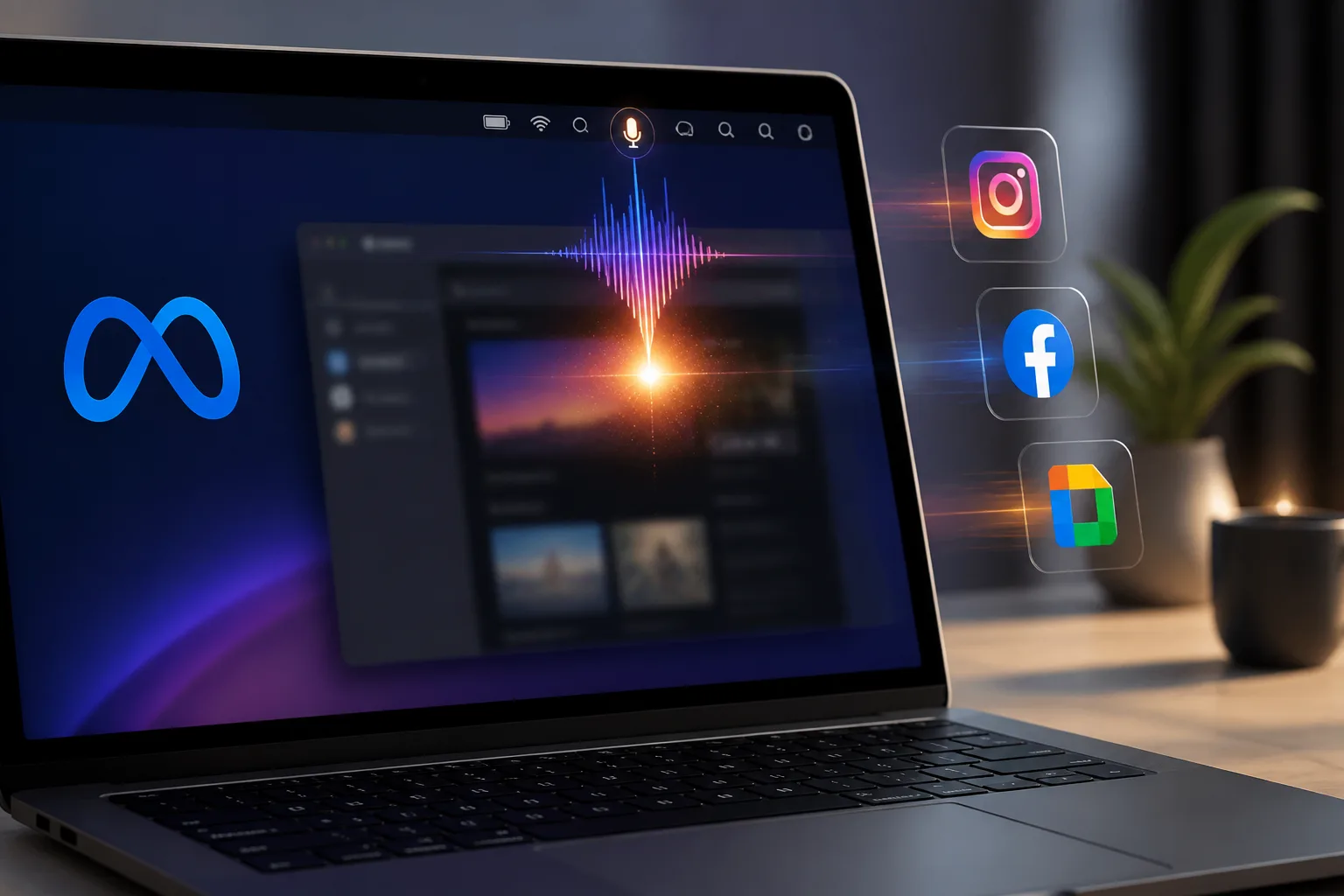
Meta on August 20, 2026 introduced a Mac app for Meta AI that combines system-wide dictation with screen-aware responses powered by its Muse Spark model, the company said.
Dictation and on-screen context
The new Mac app includes built-in dictation that functions across all applications, according to Meta. The company said the app can also inspect the active screen and respond to user queries using Muse Spark, enabling contextual answers based on what is visible.
Meta compared this capability to other tools that offer system-wide dictation, noting it follows similar updates from competitors — Google updated the Gemini app for Mac last month to add a system-wide dictation feature.
Business integrations and assistant tasks
The release is part of a broader Meta AI update aimed at business users. Meta said merchants can connect Instagram and Facebook accounts, Meta ad campaigns, and Google Workspace (Gmail, Docs, Sheets, and Slides) to Meta AI and then ask the assistant for insights.
According to the company, Meta AI can report on campaign performance and audience engagement metrics to help users see which posts performed well. The assistant can also provide intelligence on competitors using publicly available data, Meta said.
Meta added that the integration can assist with content creation and productivity tasks: the AI assistant can generate proposal decks, draft documents and create spreadsheets from connected account data, the company said. Meta has been promoting its AI tools for automated customer support and handling inquiries across its apps, including WhatsApp and Instagram.
During Meta’s Q2 2026 earnings call, CEO Mark Zuckerberg said there is a commercial opportunity to sell agents to businesses and automate work on their behalf, a strategy reflected in these product updates.
The Mac app release and its features were announced publicly by Meta on August 20, 2026; the company described the offering as intended to bring dictation and contextual assistance to Mac users and to extend Meta AI’s integrations for business workflows.
Original source: TechCrunch AI