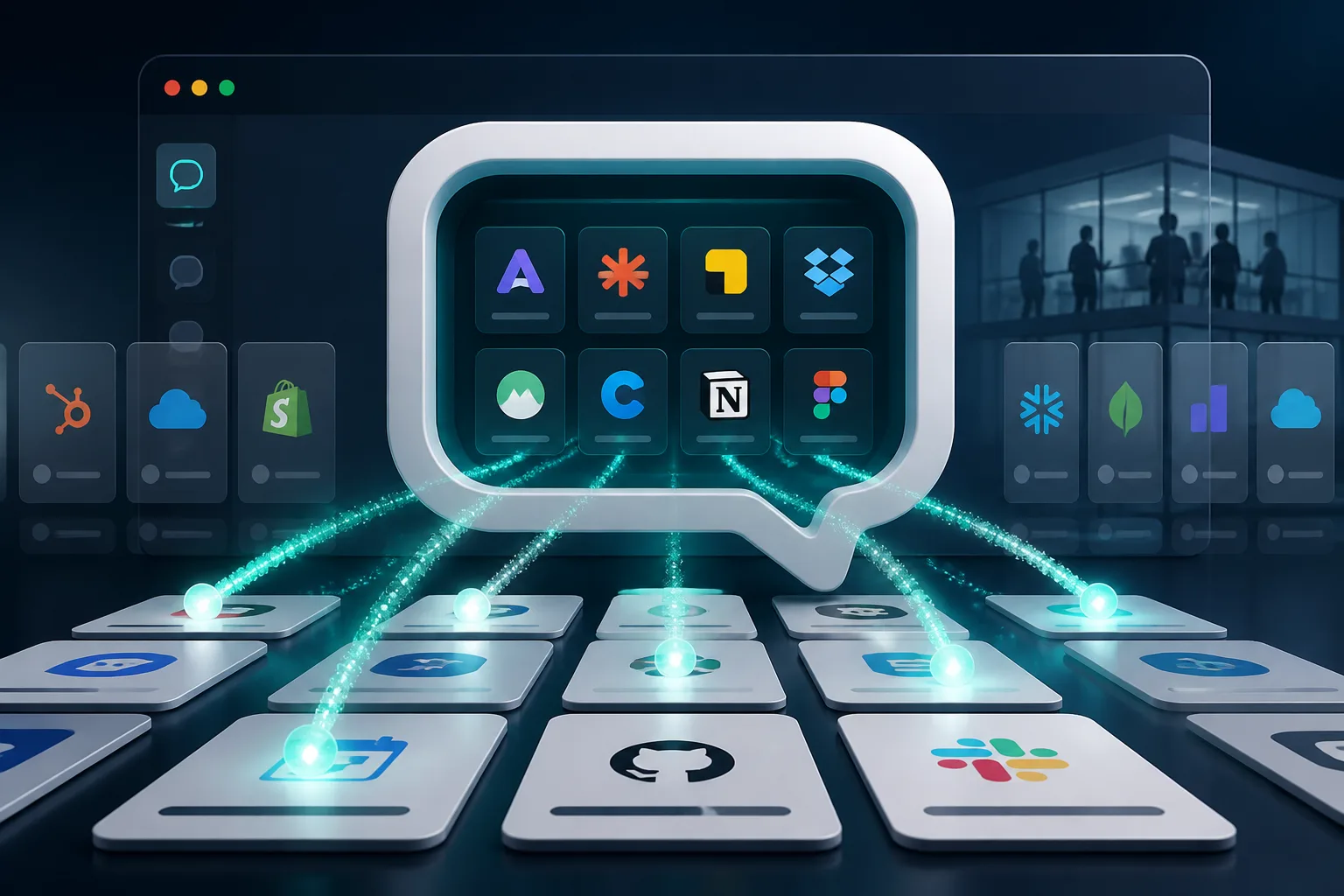
ChatGPT as a platform for apps
OpenAI announced changes that position ChatGPT as a place to discover, connect to and use third-party software directly inside conversations. The company said ChatGPT now has 1.2 billion weekly users, and will begin suggesting apps in the flow of chat when it detects a tool could help complete a task.
Developers can expand the plugin architecture to support extensions that provide interactive panels, enabling users to work with tools without leaving ChatGPT. A new “Sign in with ChatGPT” option lets people bring their ChatGPT identity and use their existing AI allowance inside participating apps, OpenAI said. The company named 16 launch partners for that effort, including Cognition’s Devin, Notion, Vercel, T3, OpenClaw and Dactyl.
Agentic Dots and developer-facing changes
OpenAI introduced autonomous AI agents called Dots that run tasks in the company’s cloud. Each Dot is described as having its own cloud computer and browser and can use connected apps; OpenAI said Dots can connect to an ecosystem of over 4,000 apps. Dots may act proactively, performing what OpenAI calls “proactive research” in read-only mode while requiring user approval for actions.
In demonstrations, OpenAI showed use cases such as a meeting app inside ChatGPT that displays calendar items, takes notes and returns follow-up summaries. Design workflows were shown with Figma and Adobe tools integrated to revise projects without switching to standalone apps. Users can share lightweight ChatGPT-produced websites that let colleagues sign in with their own credentials and permissions.
For developers, OpenAI said it has streamlined plugin submission and review: creators can track review status, see required fixes, request human review and update tools without restarting submissions. The company also launched an enterprise OpenAI Marketplace with some 30-plus partners, including Adobe, Figma, Sierra, Decagon, HubSpot, Salesforce, ServiceNow, Harvey, Legora, Palo Alto Networks, CrowdStrike and Baseten. Eligible customers may apply part of their OpenAI commitment toward approved partner software.
OpenAI did not announce a billing or revenue-sharing system comparable to the economic model of Apple and Google app stores, and said it plans to add more partners soon.
Original source: TechCrunch AI