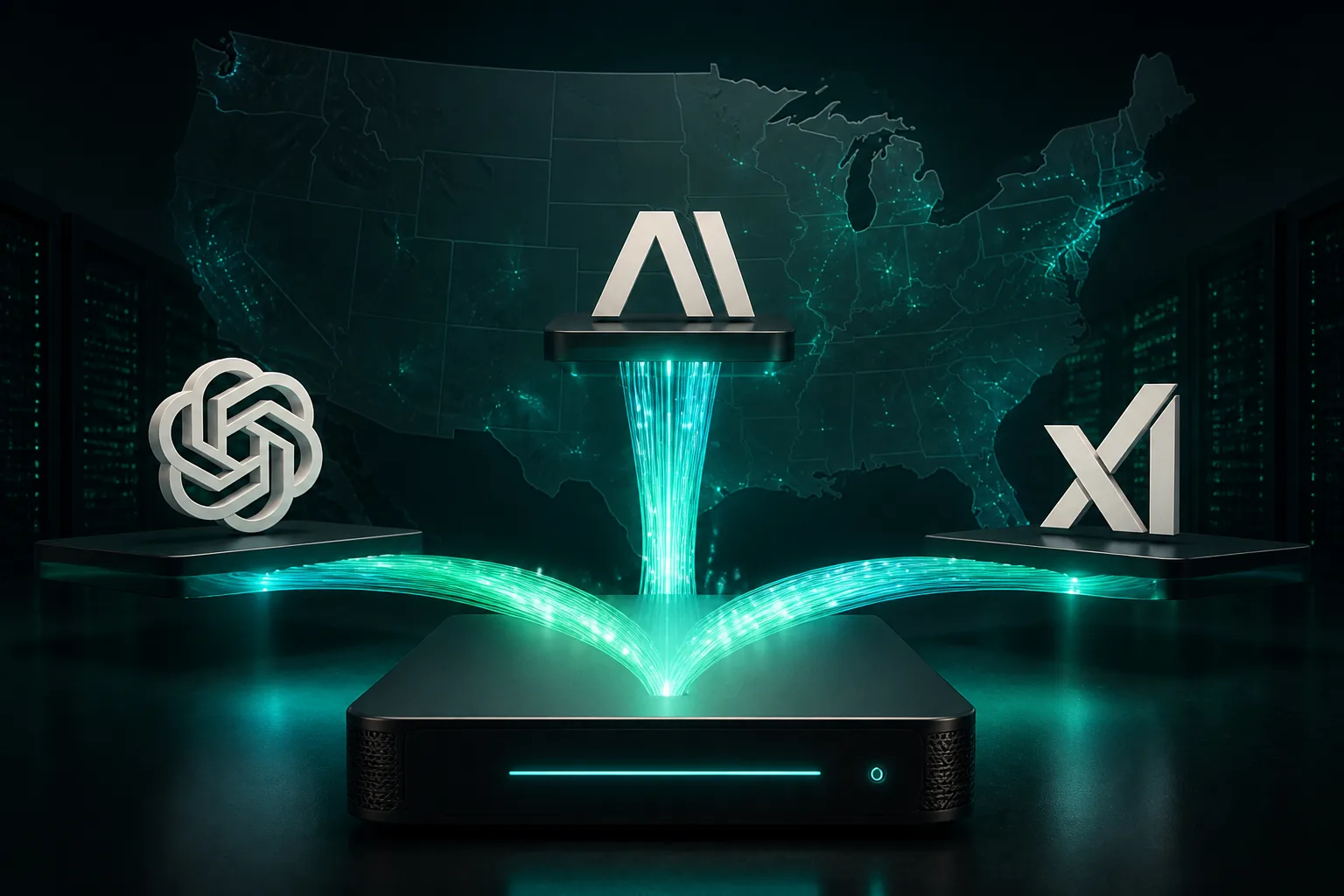
Ramp announced the launch of Router, a model routing service that lets companies send AI requests to different large language models via a single API. The company says it has used the same routing system internally for three years.
Capabilities and integrations
Router provides access to models from OpenAI, Anthropic, DeepSeek, Moonshot, Minimax, Nvidia, xAI and Z.ai. The platform includes several configurable “strategies” for directing requests: users can prefer flex usage tiers, set up routing based on up to three user-specified benchmarks, route only difficult problems to higher-cost models, or test models without switching integrations.
Customers also receive a dashboard that reports token spend, cost, latency, fallback attempts and other operational metrics, the company said.
Data handling and business context
By default, Router records model inputs, outputs and tool calls for one year. The company said it will remove personally identifiable information before using retained content to improve the product. The service includes an opt-out data retention policy, according to the announcement.
The article noted that Ramp’s entry into model routing serves two commercial aims: tapping the growing AI inference market and offering existing clients a routing service that complements Ramp’s AI token usage monitoring and token spend management. It also suggested that if Router attracts model testing traffic similar to competing services, Ramp could develop relationships with AI labs and inference providers that might help expand its customer base.
Ramp raised $750 million at a $44 billion valuation in June, the article recalled.
Router is available only in the United States for now. The service is free to use through the remainder of 2026, though users must still pay for model inference costs; a $26 launch credit is being offered. The company did not disclose pricing for 2027.
Original source: TechCrunch AI